ServicesHauling
Hauling in Winters
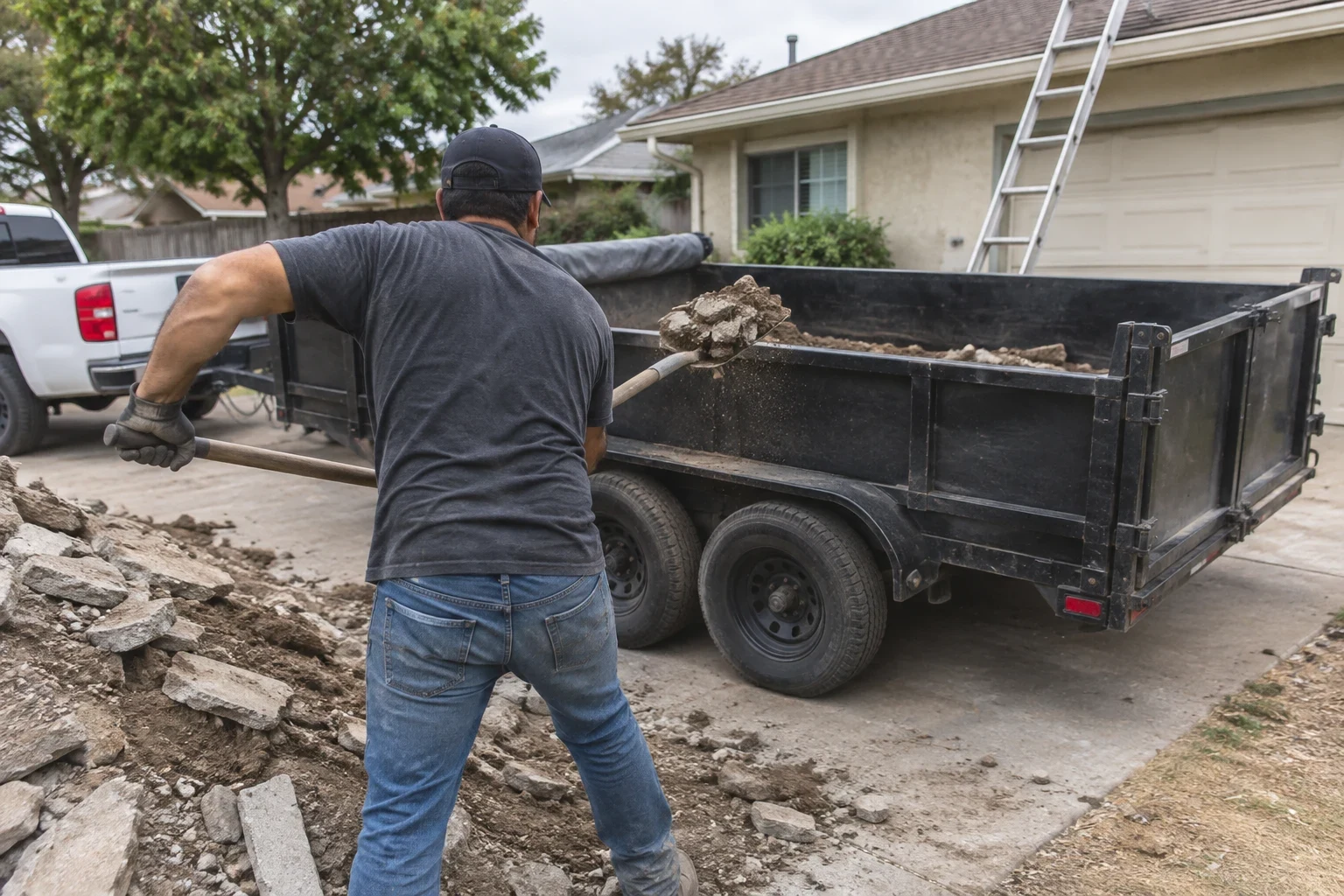
We haul the loads a pickup truck can't handle: broken concrete, excess soil, old fencing, scrap lumber and bulky items stacked beside your home. One person walks the pile with you, gives the price, and coordinates the crew through cleanup.
What Hauling Covers and When It Makes Sense
Hauling is for material that is heavy, loose or oversized rather than household clutter. Think of a slab you broke up for a new patio, soil dug out for a planter bed, a pile of fence boards and posts, or a stack of salvaged pavers. These loads are hard on a personal vehicle. Concrete weighs roughly as much per cubic yard as a small car, and a half-ton pickup reaches its payload limit long before its bed looks full.
Our approach is simple. The same person who answers your call comes out to look at the load, quotes it and stays your contact through the job. If something changes on the day, you talk to that person, not a dispatch line.
If your project is mostly mixed household items, our junk removal page is the better fit. For remodel waste such as drywall and cabinets, see construction debris.
What's Included in a Hauling Job
On-site walk-through
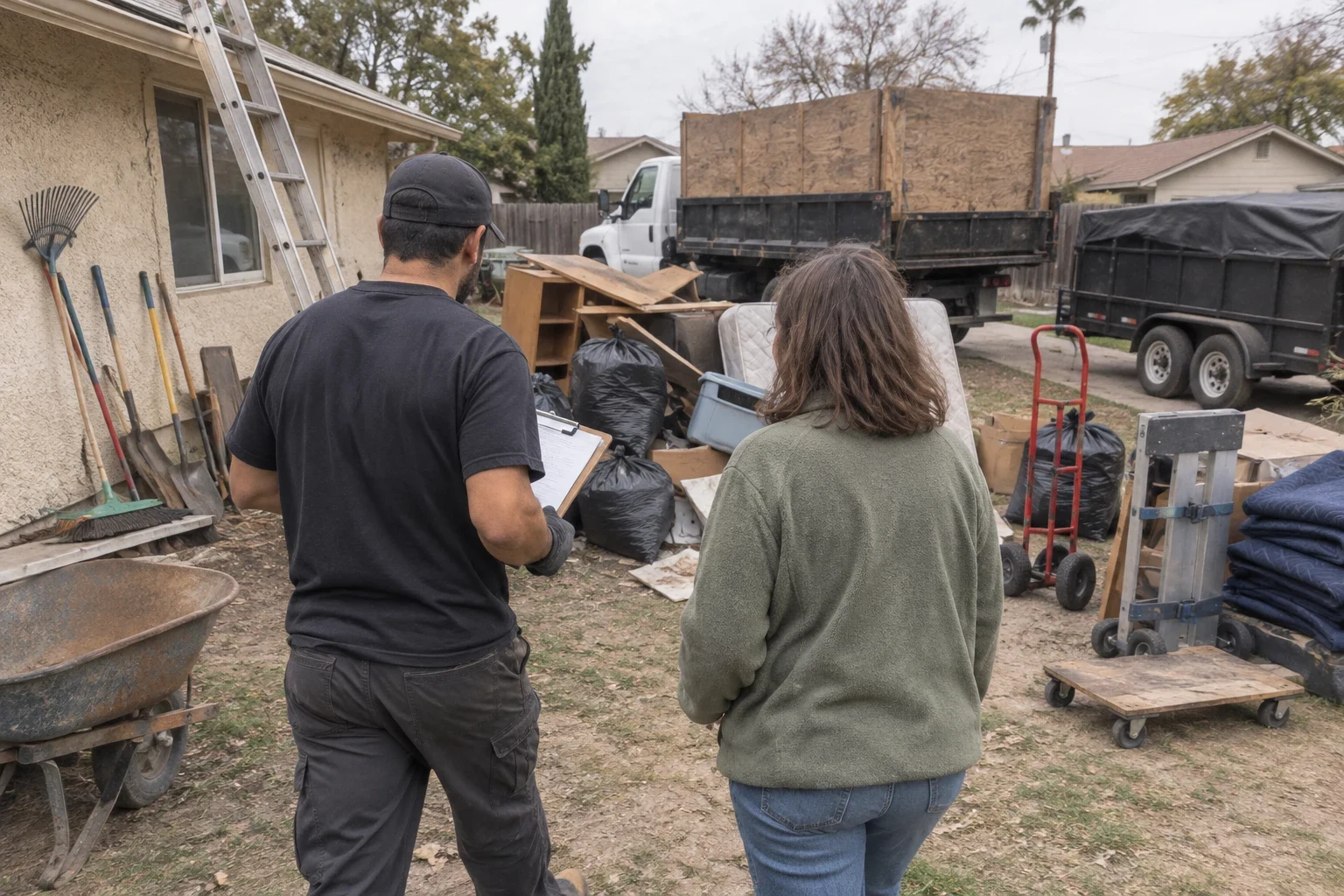
We look at the material, measure the pile and check the path from the pile to the truck. Weight, not just volume, sets how we load, so we identify concrete, rock and wet soil before we quote.
Loading by hand and with dollies
Our crew does the lifting. Heavy pieces go on dollies or are broken into manageable sizes so they can be carried without dragging across your driveway or lawn.
Material sorted for disposal
Clean concrete, clean soil and green waste can often go to recycling or reuse facilities instead of landfill. We separate them at loading so they are accepted where they should go.
Surface protection
We lay down boards or tarps on soft ground and finished surfaces when the route crosses them. That keeps a loaded dolly from rutting turf or chipping a stamped walkway.
Sweep-up when we leave
Once the load is gone, we rake and sweep the area where it sat. Soil and gravel piles leave fines behind, and we clear them instead of leaving a dusty outline.
Signs a Load Needs a Hauling Crew
- Your truck is near its payload
- If a few wheelbarrows of soil or broken slab already make your truck's rear sag, the rest of the pile is more than it should carry. Overloading wears brakes and suspension fast.
- The pile has sat through a season
- Material left outside in our hot, dry summers turns brittle and attracts rodents and wasps. Old lumber and fencing are common nesting spots once they've sat for a few months.
- Pieces are too heavy to lift safely
- Concrete chunks, railroad ties and cast iron items can each weigh more than one person should lift. Moving them alone is how backs get hurt.
- Loose fill is blocking access
- Soil or gravel piled in a side yard can block gates, cover irrigation lines and hold water against a foundation or fence. Clearing it restores access and drainage.
How a Hauling Job Runs on the Day
- 1
Phone call and scheduling
You describe the material and roughly how much there is. We set a time to come out and look, and the person you spoke with is the one who shows up.
- 2
Price set on site
We look at the pile and give you a firm number before anything moves. The price quoted on site is the price you pay, with no hidden fees added later.
- 3
Load, sort and protect
The crew protects the route, breaks down oversized pieces and loads heavy material low and forward in the truck for safe hauling. Recyclable material is kept separate.
- 4
Haul and clean up
We take the load to the appropriate facility and sweep the spot it came from. Your contact checks in with you before the crew leaves to confirm nothing was missed.
What Moves the Cost of Hauling
Hauling is priced on what it takes to move and dispose of the specific material, so two piles of the same size can cost different amounts. We explain each factor at the walk-through. You get one number on site, and that's the number you pay.
- Weight and material type
- Concrete, rock and wet soil are far heavier per load than lumber or brush. Heavier material takes more trips and higher disposal fees at the facility.
- Volume
- Larger piles mean more truck space and more loading time. We estimate the cubic yards on site rather than guessing from a photo.
- Access and distance to the truck
- A pile next to the driveway loads quickly. One in a back corner behind a narrow gate or down a slope takes more carrying.
- Mixed or contaminated loads
- Clean concrete or clean soil can often be recycled at lower cost. Material mixed with trash, rebar or treated wood has to be sorted or disposed of differently.
Hauling Questions
- Can you haul broken concrete with rebar in it?
- Yes. Rebar and wire mesh are common in slabs and walkways. We load it as is, and the facility handles separation, though heavily reinforced pieces can affect disposal cost. We'll point that out during the estimate.
- How much soil or gravel can you take in one trip?
- It depends on weight more than size. A cubic yard of dry soil is much lighter than a yard of wet clay or gravel, so we judge the material on site and plan the number of loads before we quote.
- Will your equipment damage my driveway or yard?
- We plan the route during the estimate and lay down boards or tarps over soft or finished surfaces. Our company is fully insured with commercial general liability coverage, which applies while we work on your property.
- Do I need to break the material down or bag it first?
- No. Leave it as it is. Our crew handles breaking down large pieces and loading loose material, so there's no prep work for you.
- Do you haul in towns outside Winters?
- We work in Winters and nearby communities including Davis, Dixon, Vacaville, Esparto and Woodland. Tell us where the load is when you call and we'll confirm.
Get a Firm Price on Your Load
Tell us what's in the pile and where it sits. We'll come out, look at it with you and give you a firm price before any loading starts.