ServicesYard Debris Removal
Yard Debris Removal in Winters
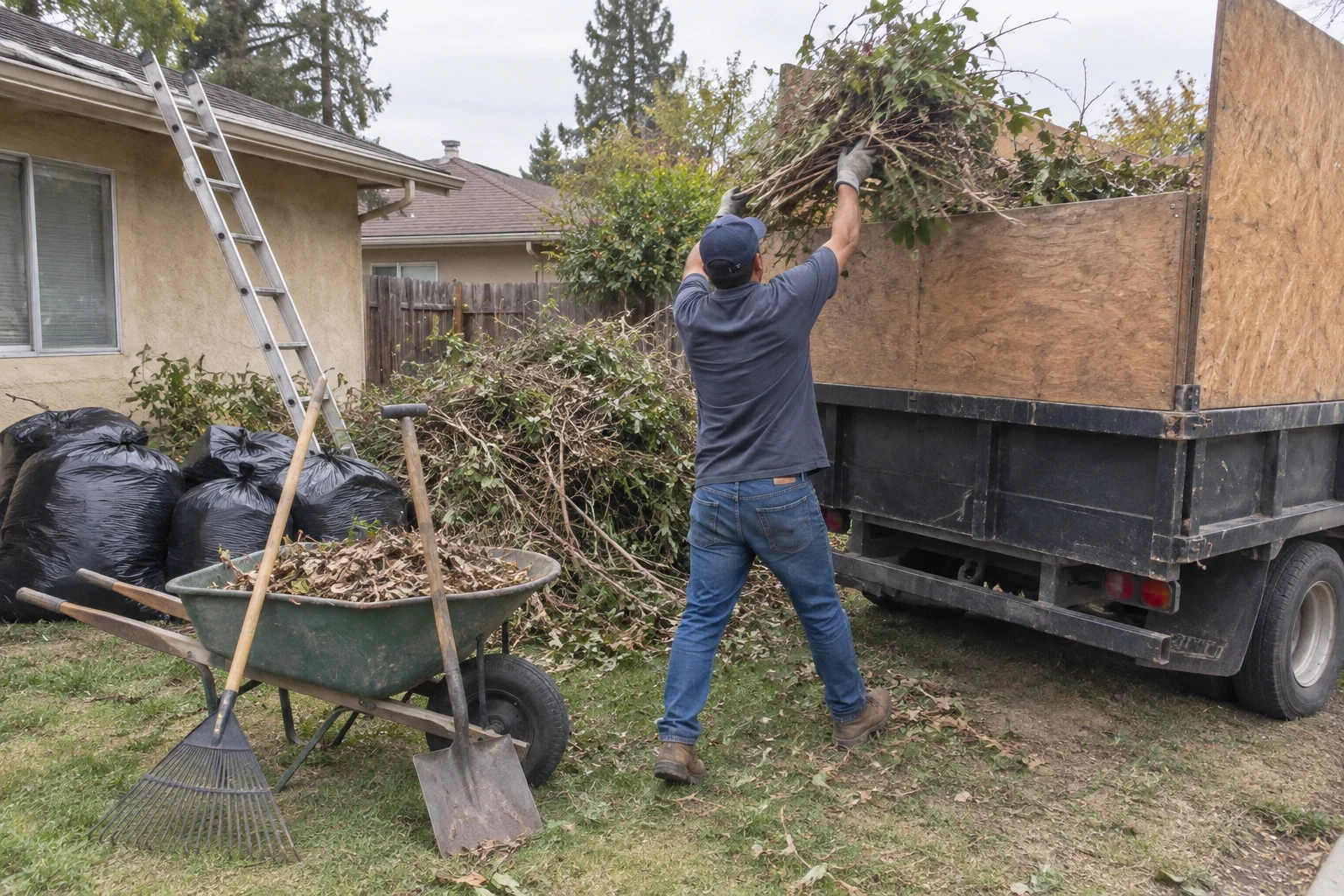
We load brush piles, fallen limbs, pruning waste and old landscaping by hand, haul it away and rake the ground clean. One person handles your call, walks the yard with you, quotes the job on site and stays your contact until the last load leaves.
When yard waste outgrows the green cart
A city green waste cart holds a few weeks of clippings. It does not hold a winter's worth of pruned limbs, a downed branch the width of your thigh, or the sod and roots from a lawn you tore out. Those piles sit, dry out and start drawing rodents. Yard debris removal is the fix: we bring the truck, the crew and the tools, and you get your yard back in one visit.
Around Winters, hot dry summers turn green brush into tinder within weeks, so we see a lot of piles that need to go before fire season rather than after. The same person who answers your call comes out to look, gives you the price and is the one you talk to on the day.
What the job includes
- Loading by hand from where it sits
- Leave the pile right where it is. Our crew walks it out from the back fence line, side yards and the space behind the shed, armload by armload, straight to the truck.
- Cutting long limbs to fit
- Long branches get cut down with a chainsaw or loppers so they pack tight in the truck bed. Tight packing uses less space, which keeps your price lower.
- Heavy material
- Sod, root balls, dirt and decorative rock weigh far more per load than brush. We take them, and we price them for their weight, not just their volume.
- Sorting green waste
- We keep clean plant material separate from lumber, wire and trash so it can go to green waste processing instead of the landfill where the load allows.
- Raking and sweeping
- Once the pile is gone, we rake up twigs and leaf litter and sweep walkways and the driveway where the truck was loaded.
Signs it is time for yard debris removal
A pile that keeps growing
Pruning cuts stacked behind the garage rarely shrink. Once the pile is taller than the cart, it will not leave a few bags at a time.
Dry brush near the house
Dead brush and leaf litter close to siding, fences and eaves is fuel. Clearing it before the summer heat sets in is one of the simplest steps toward defensible space.
Storm-dropped limbs
Winter wind and rain bring down heavy limbs that are too big to cut up and bag by yourself. Leaving them on the lawn kills the grass underneath.
Rodents and pests
Brush piles make dry, sheltered nesting spots for rats and other pests. Removing the pile removes the shelter.
A landscaping project left half done
Pulled shrubs, cut sod and old bark mulch often sit for months after a weekend tear-out. That is a single truckload problem, not a weekend of trips.
What moves the price
Most of the cost comes down to how much truck space the debris fills and how much it weighs. Access matters too, since a long carry through a narrow side gate takes more labor than a pile beside the driveway. We look at all of it during the free estimate and give you one firm number.
Volume
Loose brush takes up more room than it looks. Cutting it to length helps, but a large pile can still fill a significant part of the truck.
Weight of the material
Dirt, sod, rock and wet logs are dense. A small pile of soil can weigh more than a mountain of dry branches.
Carry distance and access
Steps, slopes, tight gates and long walks from the backyard add time to every trip to the truck.
Mixed debris
Old fencing, treated lumber, wire or trash mixed into the pile has to be separated and goes to a different facility than clean green waste.
How the day goes
- 1
You call, we talk it through
Tell us roughly what is in the pile and where it sits. We set a time to come look, and you have one person's number for every question after that.
- 2
Free on-site estimate
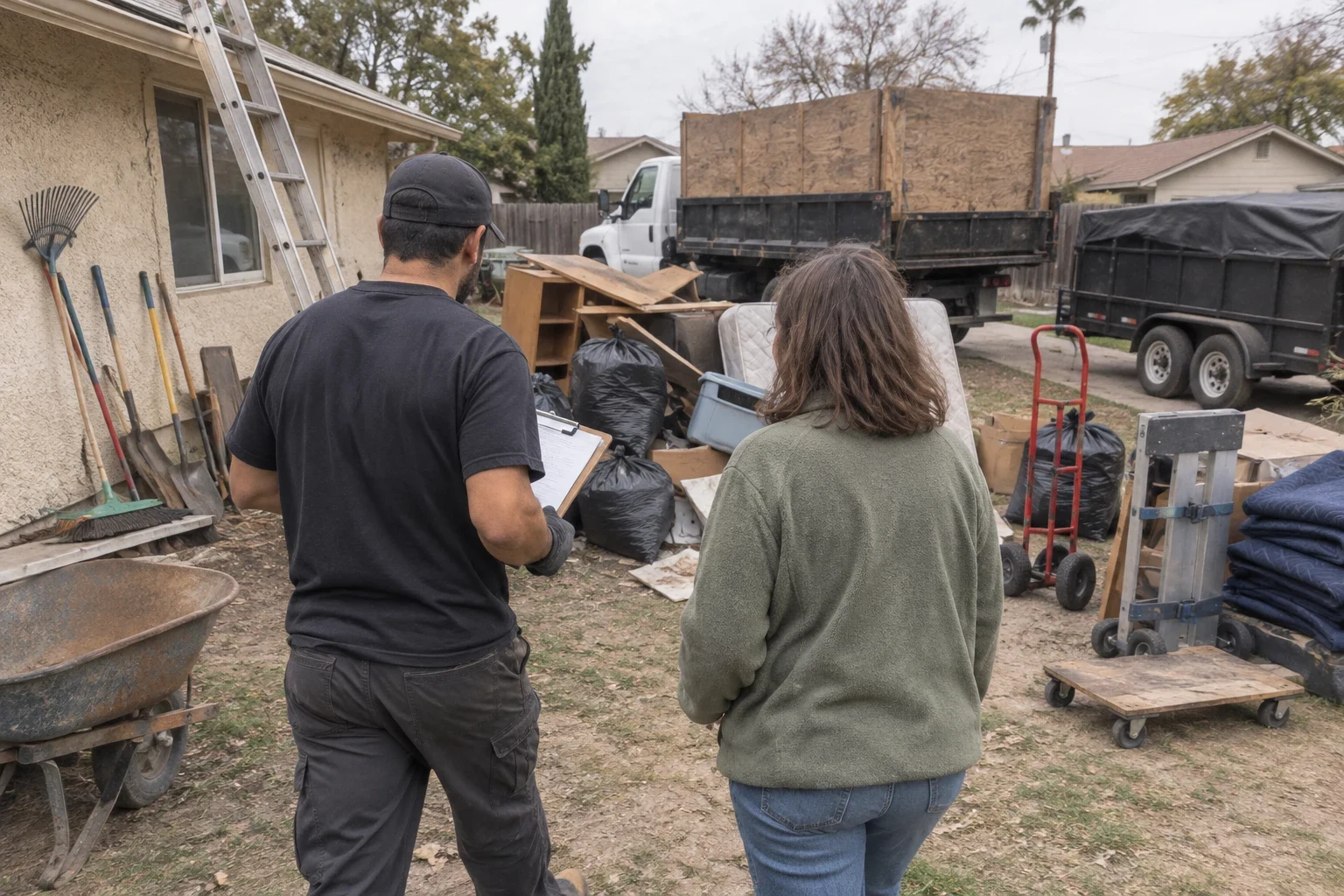
We walk the yard, check gate widths and the path to the truck, and note any heavy material. The price quoted on site is the price you pay, with no hidden fees.
- 3
Load, cut and haul
The crew cuts limbs to length, loads heavy material first so it rides low, and packs brush on top. Your contact stays on the job and answers anything that comes up.
- 4
Cleanup and walk-through
We rake and sweep, then walk the yard with you so you can see the ground is clear before we leave.
Yard debris questions
Do I have to cut branches or bag leaves before you arrive?
No. We cut long limbs to fit the truck and load loose leaves and clippings as they are. If you have already bagged material, we take the bags too.
Can you take dirt, sod and rocks?
Yes. These are heavy, so we price them for weight and load them low in the truck. Tell us about them on the phone so we can plan the load.
Do you cut down or trim trees?
We remove debris that is already on the ground or already cut, including large fallen limbs. Felling or pruning standing trees is work for an arborist, and we can haul away what they leave behind.
Will the truck or crew damage my lawn?
We park on the street or driveway and carry material out rather than driving onto the grass. We are fully insured with commercial general liability coverage.
Do I need to be home during the job?
Not necessarily. Once you approve the price at the estimate, we can work with gate access and call you when the yard is clear.
Get the pile gone before it gets bigger
One call gets someone out to look at your yard and quote the job in person. The price we give you on site is the price you pay.